Guide
Mowing height by grass type
Why taller often wins in summer stress—and rough targets by species group.
Taller mowing usually supports deeper roots, better drought tolerance, and fewer weed gaps— especially under summer stress. Exact inches depend on species, cultivar, and whether you bag or mulch.
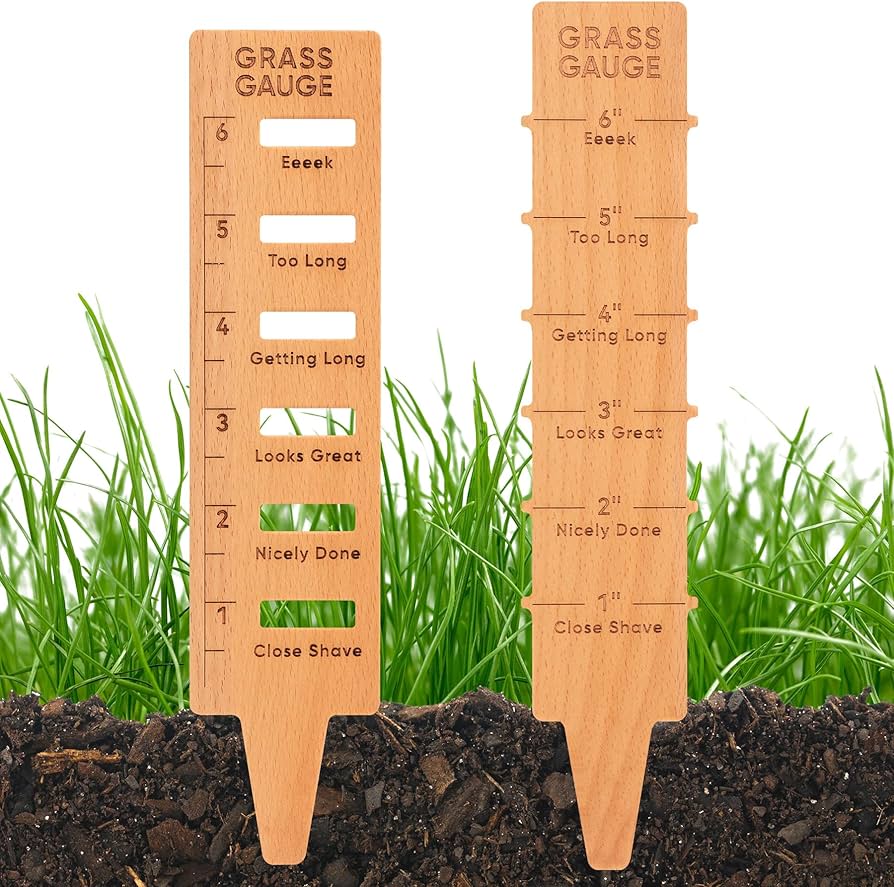
Ballpark ranges (verify for your cultivar)
| Group | Typical height range | Notes |
|---|---|---|
| Kentucky bluegrass / perennial ryegrass | ~2.5–3.5 in (often higher in heat) | Never remove more than ~⅓ of blade per mow. |
| Tall fescue | ~3–4 in for stress periods | Coarse blades tolerate taller canopies well. |
| Fine fescue (shade mixes) | often upper end of cool-season range | Shade + heat stress stacks—avoid scalping. |
| Bermuda (mowed lawn) | often lower than cool-season—season dependent | Greens-height vs home lawn differ wildly. |
| Zoysia | moderate; avoid scalp during green-up | Slower recovery than Bermuda in some sites. |
| St. Augustine | taller end for many cultivars | Wide blades show mower dullness quickly. |
Why height matters
- More leaf area = more photosynthesis when roots need energy under heat.
- Scalping invites weeds and soil heating at the crown.
- Sharp blades matter as much as inches—torn leaves lose water faster.
Choose mower style in your profile so reminders stay realistic—reel vs rotary vs riding changes quality of cut and striping, not just convenience.